
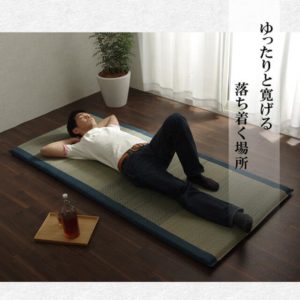
Warum wir Tatami Rush Nap Matratze empfehlen
Die Tatami Rush Nap Matratze ist eine Nap-Matratze aus Tatami-Material mit einem einfachen Gittermuster unter Verwendung des natürlichen Materials Rush. Komfortable Tatami Rush Nap Matratze Tatami Rush ist: Diese Matratze verwendet Tatami Rush Material aus Japan Jeder Rush ist dickflüssig und hat eine dicke Haut und feine Fasern. Das Innenmaterial besteht aus 40 mm harter Baumwolle mit Fokus auf Dämpfungseigenschaften, so dass es genau die richtige Elastizität aufweist und auch auf dem Boden bequem verwendet werden kann. Die Verarbeitung von Aomori Hiba wird auf die Oberfläche von Tatami Rush aufgetragen. Eigenschaften von Tatami Rush Produktgröße (ungefähr) 90 x 200 cm Material Auskleidung: Japanischer Rausch Mittleres Material: Polyester Herkunftsland: Japan
Why we recommend Tatami Rush nap mattress
Tatami Rush nap mattress is a nap mattress made of Tatami material with a simple lattice pattern using the natural material Rush. Comfortable Tatami Rush nap mattress Tatami Rush is: This mattress uses Tatami Rush material from Japan Each Rush is thick and has a thick skin and fine fibers. The inner material is made of 40mm hard cotton with a focus on cushioning properties, so it has just the right amount of elasticity and can be used comfortably even on flooring. Aomori Hiba processing is applied to the surface of Tatami Rush. Features of Tatami Rush Product size (approximately) 90 x 200 cm material Lining: Japanese Rush Middle material: […]
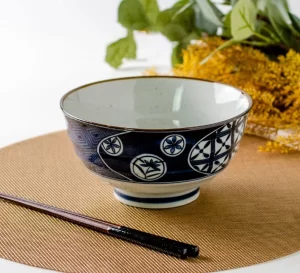
Was ist Mino-Ware? Mino-Ware, die sich mit Funktionen und Typen weiterentwickelt
Mino-Keramik wird in vielen Geschirren in Japan verwendet. Mino-Keramik ist ein traditionelles japanisches Handwerk und das Standardgeschirr Japans. Es wird gesagt, dass sie in der Nara-Zeit aus Sueki stammt und ihren Höhepunkt in der Azuchi-Momoyama-Zeit erreichte. Von der Nara-Zeit bis heute hat sich die Technik weiterentwickelt und ist heute aus dem japanischen Esstisch nicht mehr wegzudenken. Die Eigenschaften der Mino-Keramik sind auch heute noch unverändert weitergegeben worden, wenn sie im täglichen Leben der Japaner gelegentlich verwendet wird. Der Fluss der Verwendung von Glasur und die Freude an verzerrten Formen sind die Merkmale von Mino-Keramik, und die Einzigartigkeit von Mino-Keramik wird auch heute noch geliebt. Und um mit der Zeit zu […]
What is Mino ware? Mino ware evolving with features and types
Mino ware is used in many of the tableware in Japan. Mino ware is a traditional Japanese craft and the standard tableware of Japan. It is said to have originated from Sueki in the Nara period, and reached its peak in the Azuchi-Momoyama period. From the Nara period to the present day, the technique has continued to evolve, and today it has become an indispensable part of the Japanese dining table. The characteristics of Mino ware have been handed down unchanged even today, when it has come to be casually used in the daily life of Japanese people. The flow of using glaze and the enjoyment of distorted shapes are […]
Was ist die Geschichte und die Eigenschaften der Shigaraki-Keramik?
Shigaraki-Keramik ist eine Keramik, die hauptsächlich in Shigaraki-cho, Stadt Koka, Präfektur Shiga, hergestellt wird. Es ist einer der sechs alten Öfen Japans. Es zeichnet sich dadurch aus, dass es aus hochwertiger, klebriger Erde besteht und in einer Vielzahl von Größen hergestellt wurde, von klein bis groß. Der Marderhund aus Shigaraki-Keramik ist berühmt, aber in der Vergangenheit hat er sich zu einem Gefäß und Werkzeug entwickelt, das das Leben der Menschen im Laufe der Zeit unterstützt, wie z. B. Gläser, Gläser, Mörser, Kohlenbecken, Schirmständer, Badewannen und Fliesen. Yakishime-Keramik macht sich die Textur des Tons zunutze und wird ohne Verwendung von Glasur gebrannt, was zu einem leicht rötlichen "hiiro" (Feuerfarbe) führt. Japanischer […]
What is the history and characteristics of Shigaraki ware?
Shigaraki ware is a pottery produced mainly in Shigaraki-cho, Koka City, Shiga Prefecture. It is one of the six ancient kilns of Japan. It is characterized by being made of high-quality sticky soil, and has been made in a wide range of sizes, from small to huge. The raccoon dog of Shigaraki ware is famous, but in the past, it has developed as a vessel and tool that supports people's lives according to the times, such as jars, jars, mortars, braziers, umbrella stands, bathtubs and tiles. Yakishime pottery takes advantage of the texture of the clay and is fired without the use of glaze, resulting in a faintly reddish “hiiro” […]
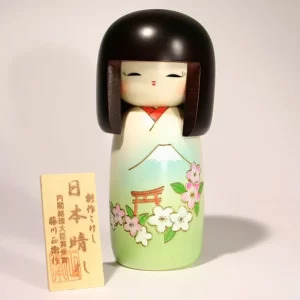
Eigenschaften der japanischen Puppe Usaburo Kokeshi
Die Merkmale der Kokeshi-Puppenherstellung von Usaburo sind, dass der Körper geformt ist (pralle Rundheit) und das Design durch die Kombination von Pinselmalerei, Skulptur und Keramik einen dreidimensionalen Effekt ausdrückt. Darüber hinaus arbeitet Usaburo Kokeshi an Innovationen bei Produktionstechniken wie der Töpferscheibentechnik und speziellen Maschinentechniken. Die Materialien von Usaburo Kokeshi sind insofern einzigartig, als sie die Schönheit der natürlichen Holzmaserung wie Zelkova, Hartriegel und Kastanie sowie die Teile, die entsprechend der Individualität des Holzes verwendet werden, nutzen. Was macht den Reiz von Usaburo Kokeshi aus? Natürlich die eigene Niedlichkeit und die soliden technischen und gestalterischen Fähigkeiten von Usaburo Kokeshi. Usaburo Kokeshi Japanische Puppe Die Materialien, die für den Hauptkörper der Kokeshi-Puppen […]
Features of Usaburo Kokeshi Japanese doll
The characteristics of Usaburo's kokeshi doll making are that the body is devised (plump roundness), and the design expresses a three-dimensional effect by combining brush painting, sculpture and pottery. Usaburo Kokeshi is also working on innovations in production techniques such as potter's wheel technology and special machine techniques. Usaburo Kokeshi's materials are unique in that they use the beauty of the natural wood grain, such as zelkova, dogwood, and chestnut, as well as the parts that are used according to the individuality of the wood. What is Usaburo Kokeshi's appeal? Of course, Usaburo Kokeshi's own cuteness and solid technical and design skills. Usaburo Kokeshi Japanese Doll The materials used for […]
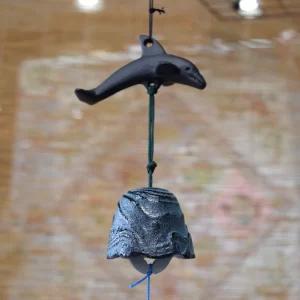
Eigenschaften und Geschichte der Southern Furin Windspiele
Das größte Merkmal der Southern Furin Windspiele ist der "Klang". Langer, klarer Klang, den andere Furin-Windspiele nicht erzeugen können. Das Geheimnis des Klangs von Nanbu Furin Windspielen besteht darin, dass sie aus hochdichten Gussteilen und Nanbu-Eisenwaren hergestellt werden, wobei hochwertiger Eisensand und Gesteinseisen (Eisenerz) als Rohstoffe verwendet werden. Geschichte und Hintergrund von Nanbu Tekki (Furin-Windspiele) Was ist die Geschichte hinter der Entstehung der Southern Furin Windspiele mit hoher Heilwirkung? Es begann, als am Ende der Heian-Zeit Gießer aus Omi eingeladen wurden. In der Präfektur Iwate sind Mizusawa in der Stadt Oshu und die Stadt Morioka berühmt für die Herstellung von Nanbu-Eisenwaren. Eisenwaren aus Mizusawa, Oshu City, hat die längste Geschichte […]
Characteristics and History of Southern Furin wind chimes
The biggest feature of Southern Furin wind chimes is "sound". Long, clear sound that cannot be produced by other Furin wind chimes. The secret to the sound of Nanbu Furin wind chimes is that they are made from high-density castings and Nanbu ironware, using high-quality iron sand and rock iron (iron ore) as raw materials. History and background of Nanbu Tekki (Furin wind chimes) What is the history behind the creation of Southern Furin wind chimes with a high healing effect? It started when casting craftsmen were invited from Omi at the end of the Heian period. In Iwate Prefecture, Mizusawa in Oshu City and Morioka City are famous for […]